A guide to common-area-maintenance expense categories
The standard CAM expense categories, which ones are typically controllable vs. uncontrollable, and how they usually get grouped in a reconciliation.
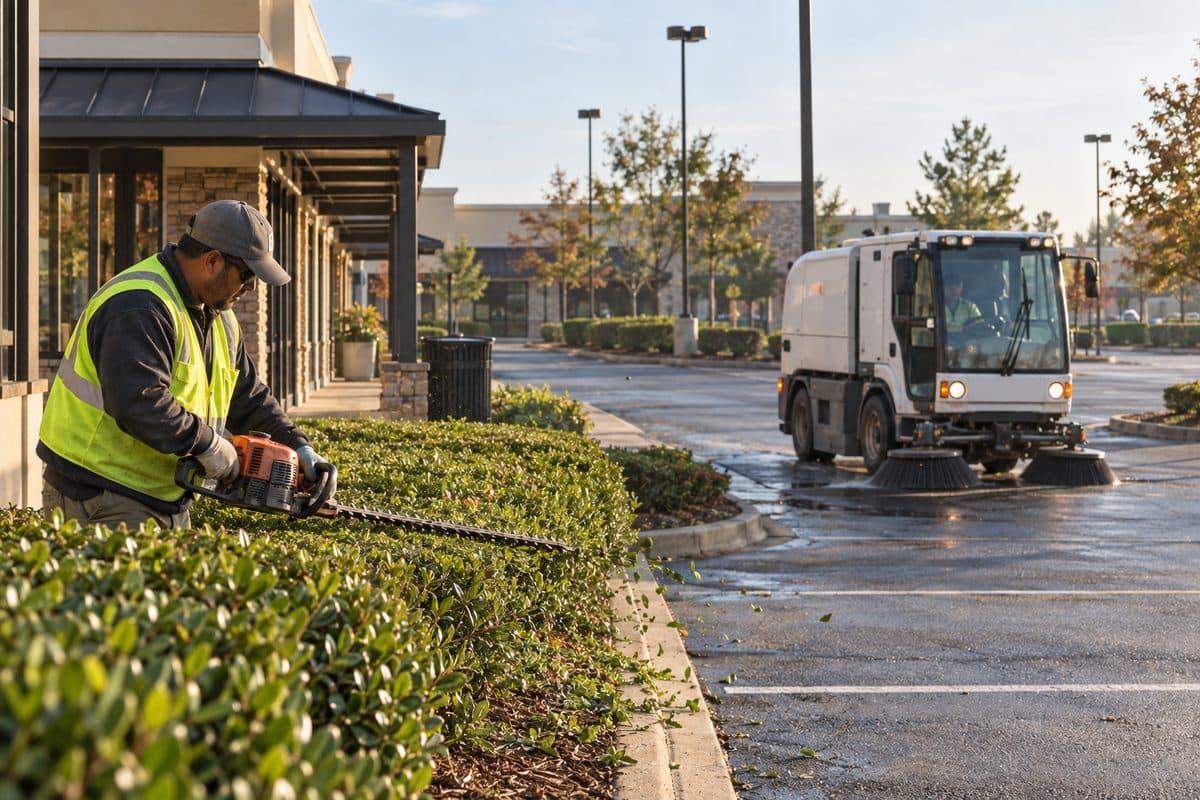
Most CAM disputes come down to a handful of categories, and most owners are working from an incomplete mental list of what belongs in CAM at all. Here's the standard set.
BEFORE YOU SEND THE STATEMENT
The reconciliation checklist and the calculator that goes with it.
Every record to gather and every lease rule to confirm, in order; then check one tenant’s number with a cap applied.
01 / 04
The standard CAM category list
Lease language varies, but most commercial CAM pools draw from the same core set of categories.
Key points
- Real estate taxes and property insurance (in a true NNN lease)
- Common-area utilities (lighting, irrigation)
- Landscaping and grounds maintenance
- Snow and ice removal
- Parking lot maintenance, striping, and resurfacing
- Common-area janitorial and cleaning
- Security services and systems
- Trash and waste removal
- Fire and life-safety system maintenance and inspection
- General repairs and maintenance
- Pest control
- Administrative or management fee
02 / 04
Controllable vs. uncontrollable, by category
Taxes and insurance are almost always uncontrollable—the landlord has little ability to influence either, so leases rarely cap them. Utilities and snow removal are often treated as uncontrollable too, since weather and usage drive them more than landlord decisions.
Landscaping, janitorial, security, general repairs, and the administrative fee are the categories most commonly labeled controllable, and therefore the ones a cap (see our guide on CAM caps and exclusions) is most likely to apply to.
03 / 04
Categories that commonly get excluded outright
Capital expenditures—a full roof or parking lot replacement rather than a patch repair—are the most frequently excluded category, or allowed only as an amortized portion over the item's useful life. Leasing commissions and tenant-improvement costs are excluded because they benefit the owner's re-leasing effort specifically, not the tenants already paying CAM. For the full mechanics of how caps and exclusions apply once you know the category, see our guide on CAM caps and exclusions.
04 / 04
Categories that are easy to miscategorize
A “repair” that's really a capital replacement in disguise (patching a roof section that actually needed full replacement) is the most common miscategorization, since it can inflate the current year's recoverable CAM with a cost that should have been excluded or amortized. An administrative fee mistakenly calculated on non-CAM costs, or a security cost that's really a one-time incident response rather than a recurring service, are the next most common.
FAQ
Frequently asked questions
Is the management or administrative fee always part of CAM?
Usually, yes, but often with its own separate cap—many leases limit the admin fee to a stated percentage of total CAM (commonly 10-15%), distinct from the controllable-expense cap on other categories.
How are capital reserves handled if the lease doesn't mention them?
If a lease is silent on capital reserves, they generally aren't recoverable through CAM at all—recoverability has to be explicitly granted by the lease, not assumed by the landlord.
Free template
Get the CAM reconciliation worksheet
The spreadsheet version: recoverable pool, each tenant's share, caps, proration, admin fee and the true-up balance. Comes with the reconciliation and audit checklists.
- CAM reconciliation worksheetSpreadsheet template
- CAM Reconciliation ChecklistPrintable checklist
- CAM Audit Checklist for Landlords and TenantsPrintable checklist
Put it into practice
TenantPoint handles this workflow in CAM reconciliation software and Commercial property bank reconciliation. See all TenantPoint solutions or how it compares with other software.
This educational material is not legal, accounting, tax, or investment advice. Review controlling lease language and consult qualified professionals when appropriate.
Back to resources